
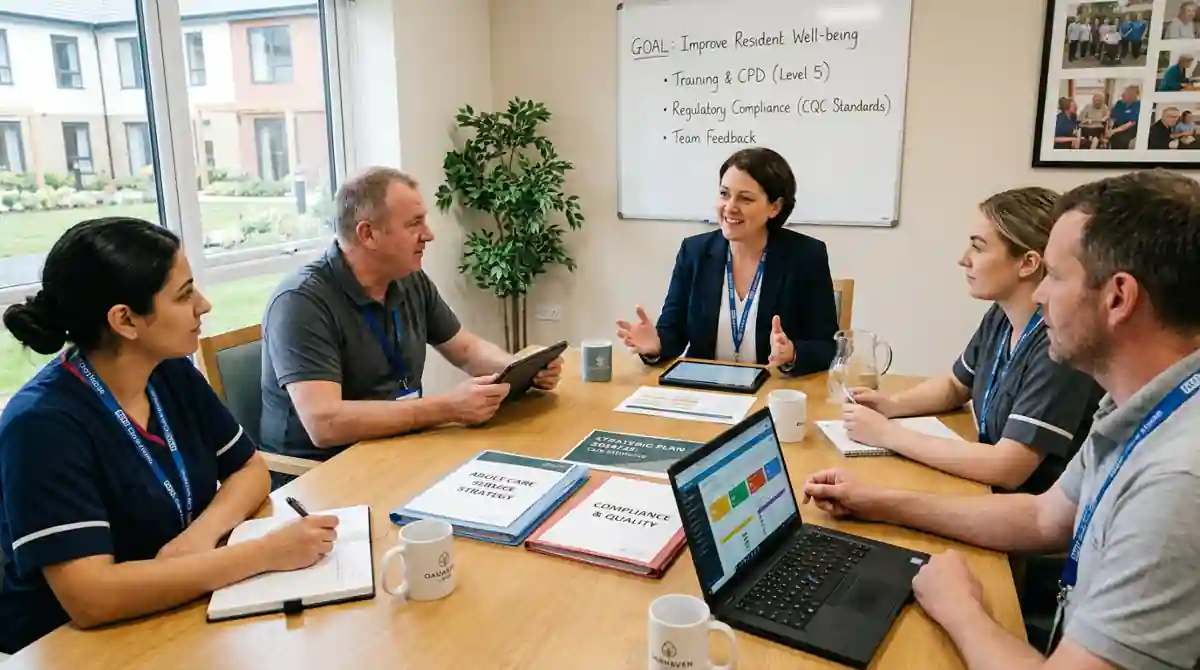
1. How to Become a CQC Registered Manager: Understand the Role
A registered manager leads the day-to-day work of a regulated service. In England, CQC decides whether to register the person for that role. The manager shares legal duties with the provider.
Start by learning about the service you plan to lead. Read CQC’s new manager guidance. Then discuss the role with the provider. Check these points:
- Who will receive care, and what support will they need?
- Which regulated activities will the service carry out?
- Who will you lead, and who will support you?
- Which decisions will you make each day?
Write a short outline of the role. Use it to check whether your skills fit the service. A home care role may need different experience from a care home role.
2. Review Your Qualifications and Experience
A diploma is one part of your background. CQC also looks at whether you have the skills and experience to manage the service. Read its Regulation 7 guidance alongside the current application guidance.
Make a clear record of work you have done. For each example, note:
- The team or task you were responsible for.
- The problem or need you identified.
- The action you took and why.
- The outcome and how you checked it.
Keep copies of relevant training records and qualifications. Explain gaps honestly. If your role was to support a manager, state what you did yourself. Do not claim authority or experience you did not have.
3. Consider Relevant Level 5 Adult Care Study
Choose a course that fits the service you want to manage. HHF offers the Highfield Level 5 Diploma in Leading and Managing an Adult Care Service. This course needs real work evidence of management practice, as well as written tasks.
Before you enrol, ask HHF to review:
- Your current adult care role and duties.
- The staff or service work you help to manage.
- The evidence and observations you can arrange.
- Any gaps in your experience or study skills.
A general management course and a children’s residential pathway serve different purposes. Check the exact units. Our Level 5 evidence guide explains course preparation. Completing a diploma does not itself grant CQC registration.
4. Build Experience Across Service Responsibilities
Work with your employer to plan useful experience. Stay within your current role and ask for support when a task is new. You may need to develop skills in:
- Supporting and supervising staff.
- Reporting concerns and following safeguarding procedures.
- Responding to complaints and learning from them.
- Checking records, resources and service quality.
For example, a deputy might review missed care visits. They could check the records, speak with staff and discuss the causes with their manager. An agreed change to the rota could then be tested and reviewed.
Keep a note of what changed and who benefited. A policy on its own does not show that you used it well. Your account should explain your own work and the support you received.
5. Prepare for the Application Process
Use the current CQC form for your circumstances. Check the route with the provider before you start. A new manager application and a change involving an existing manager can need different forms.
Use CQC’s current instructions to plan what to gather:
- The service and provider details requested.
- Your work history and explanations of gaps.
- Copies of relevant qualifications and training.
- The DBS and other checks CQC requires.
Do not assume an old DBS certificate meets the current rules. Follow the official process. Share private records only through the channels requested by CQC.
Check names, dates and contact details before submitting. Keep a copy of what you send. CQC may ask for more detail or arrange an interview. Follow its instructions and allow time for the checks.
6. Explain How You Would Lead the Service
Prepare to explain your work in plain language. Use real examples rather than memorised phrases. A useful practice task is to choose one issue and answer four questions:
- What was the concern?
- What facts did you check?
- What action did you take, and why?
- How did you know whether it worked?
For example, explain how feedback led to a change in staff support. Describe the need, the agreed action and the later review. Protect the identity of the people involved.
Be clear about the limits of your experience. Explain when you sought help and what you learned. This exercise helps you prepare a clear account of your practice. It is not a list of guaranteed CQC interview questions.
7. Agree a Realistic Development Plan
Knowing how to become a CQC registered manager includes knowing what you still need to learn. Agree a plan with your employer before applying. Set out:
- The skills or experience you need to build.
- The work opportunities and support you will need.
- Any relevant course or training to consider.
- Dates to review progress and check the next step.
Review the plan as your role changes. A job offer, course enrolment or diploma does not guarantee registration. CQC makes the decision.
Check the latest official guidance when you are ready to apply. For study options, compare HHF’s care qualifications or ask for a suitability review. Our care career guide can help you plan earlier steps towards a management role.