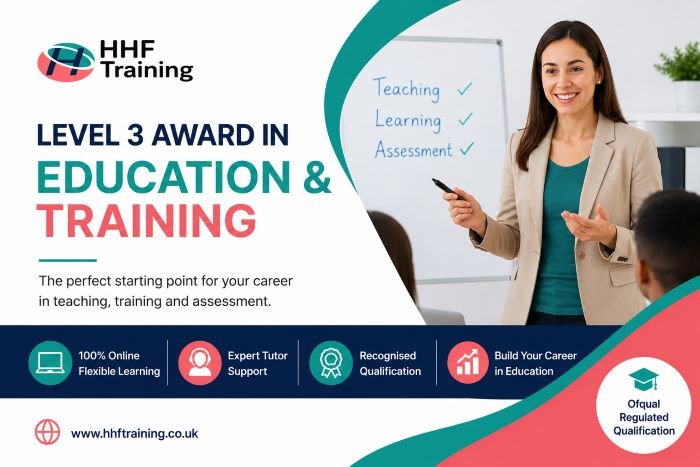
Level 3 Award in Education and Training
Start your teaching journey with inclusive teaching, assessment and micro-teaching.
Explore eleven Education & Training Courses from Level 1 to Level 5. Study teacher training courses online, or choose classroom support, Early Years, workplace learning, guidance or mentoring. Get tutor support as you study. Check the practical evidence required for your chosen course.

Flexible Online Study
Access structured learning online and organise study around work and personal commitments.
Recognised Qualifications
Study qualifications issued by established Ofqual-regulated awarding organisations.
Expert Tutor Support
Receive guidance with course requirements, assessment and progress throughout your studies.
Levels 1 to 5
Explore mentoring, early years, learning and development, guidance and teacher training qualifications.
Compare eleven Education & Training Courses from Level 1 to Level 5. Choose adult teaching, classroom support, mentoring, Early Years, learning and development, or guidance. Check each course’s entry requirements, units and practical assessment.

Start your teaching journey with inclusive teaching, assessment and micro-teaching.

Develop teaching practice through planning, delivery, assessment and observed sessions.
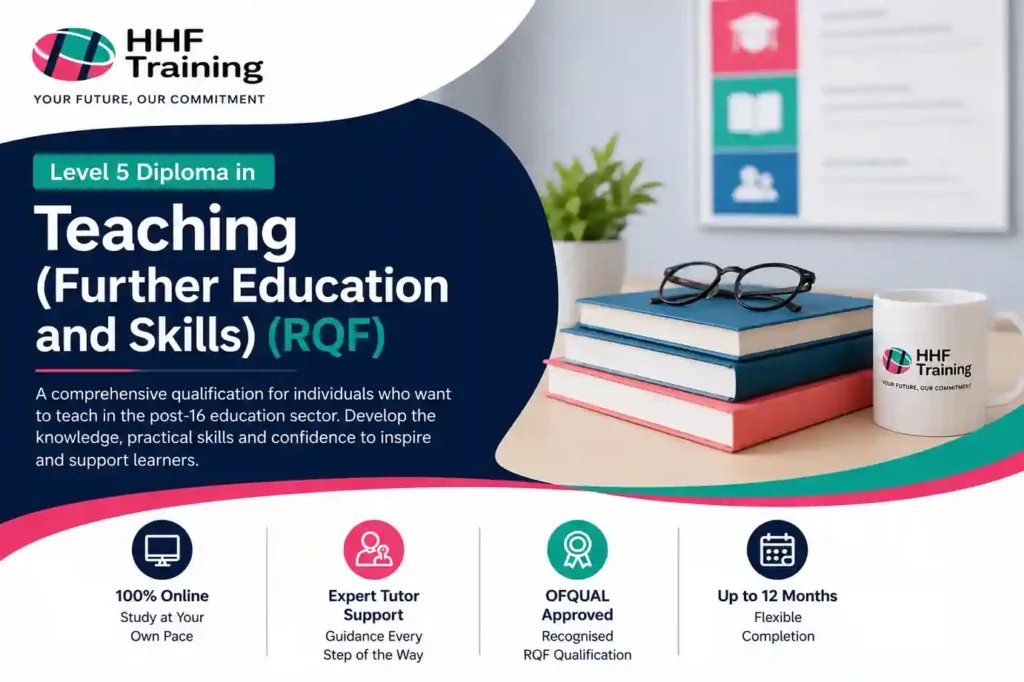
Prepare for Further Education teaching with placement, mentoring and professional practice.

Build workplace learning skills with authentic learner support and assessed practice.

Provide information, advice and guidance to real service users with assessor observation.

Develop early years knowledge and workplace competence with a suitable placement.

Develop the knowledge and practical evidence needed for an early years educator qualification.

Learn mentoring foundations through three mandatory units and portfolio assessment.

Build skills to support pupils and teachers through online study and school-based assessment.

Develop knowledge of supporting teaching, learning and pupil wellbeing in schools.

Build higher-level classroom support skills with online learning and school-based assessment.
Choose a course that fits your role, experience and career plans. Check whether you can access the teaching practice it requires.
New to teaching? Study the AET course online. Learn about your role, ways to include all learners and how to assess learning. Complete micro-teaching too.
Build on your teaching skills at Level 4. You need to teach or have access to suitable teaching practice. The course includes observed sessions.
Prepare to teach in Further Education and Skills. You need a suitable placement, a mentor and real teaching practice that can be observed.
Choose Learning and Development for a role in workplace learning. For roles that help clients make choices, explore Information Advice and Guidance.
Need help choosing a teaching qualification? Tell us about your experience and access to teaching practice. We can help you compare routes before you enrol.
Entry and evidence requirements vary by course. Introductory courses may use micro-teaching. Level 4 and Level 5 courses need genuine teaching practice and suitable professional evidence.
Study theory, complete written tasks and prepare your portfolio online. Practical evidence is also required where a course assesses teaching skills.

HHF Education & Training Courses suit people starting in teaching, building skills in their current role or preparing for greater responsibility.
Know your duties as a teacher or trainer. Understand the limits of your role and how to work with others.
Plan lessons that include all learners. Take account of their starting points, needs and any barriers they face.
Create clear lesson plans, tasks and resources. Link each part of the lesson to what learners need to achieve.
Choose fair ways to assess learning. Give helpful feedback and keep track of each learner’s progress.
Use online tools and resources to support learning. Make them easy to access, clear and useful for your learners.
Review your teaching and listen to feedback. Use what you learn to plan how you will develop your skills.
Complete the knowledge parts of online teacher training through course materials and assignments. Provide teaching evidence and complete the professional assessments required for your qualification.
Read course materials online. Plan your study around work and home life, with time for each task.
Complete written tasks to show what you know. Explain how you would teach, support learners and assess their work.
Keep lesson plans, resources and examples of learner work. Add your own reflections and other real teaching evidence where required.
Complete the teaching tasks set by your course. These may include micro-teaching, recorded sessions or an assessor watching you teach.
Get clear feedback on your work. Use it to see what you have achieved and what you need to improve.
Your work goes through the required quality checks. Your certificate is issued once all units, assessments and checks are complete.
These qualifications can help you progress in adult education, Further Education, workplace learning and vocational training. Jobs also depend on your subject knowledge, practical skills, experience and employer requirements.

Our Education & Training Courses cover adult teaching, school support, Early Years and workplace learning. Choose a route that fits the job you want and the practical experience you can access.
Teaching adults: compare our online teacher training courses. The Level 3 Award in Education and Training (AET) introduces teaching and includes micro-teaching. The Level 4 Certificate in Education and Training (CET) develops teaching practice. The Level 5 Diploma in Teaching is an FE and Skills route. CET and the Diploma need suitable access to real teaching.
Supporting pupils: explore teaching assistant courses online through Level 2 Supporting Teaching and Learning or the Level 3 Award. For higher-level support, compare our Level 4 HLTA course. Check each award's school experience and assessment requirements.
Working with young children: compare our Early Years courses: the Level 2 practitioner Diploma and Level 3 educator Diploma. Read the placement requirements before you enrol.
Supporting adults at work: choose Learning and Development for workplace learning, Information, Advice and Guidance for helping people make choices, or Level 1 Mentoring for mentoring foundations.
Check the exact award on the Ofqual Register and read Department for Education guidance on FE teacher training. For assessment roles, compare our Assessment & Verification Courses.
Our guides explain AET microteaching, becoming an HLTA and Level 2 versus Level 3 Early Years. Contact HHF Training if you need help choosing.
Yes. Study the theory, complete written tasks and prepare your portfolio online. Practical courses also need teaching evidence. This may include micro-teaching, a placement or an assessor watching you teach. Check your course before you enrol.
For an introduction to teaching adults, start by comparing the Level 3 AET. If you can access real teaching, compare the Level 4 CET and Level 5 Diploma in Teaching. They have different teaching practice and assessment requirements. A school support or Early Years course may fit better if you want to work with children. Choose by role and course requirements, rather than level alone.
AET means the Level 3 Award in Education and Training. PTLLS was an earlier teaching qualification. People still use the old name when they search, but AET is the current award.
You do not normally need a teaching job or past teaching experience. You must still meet the entry requirements and complete micro-teaching and all other course tasks.
Yes. You need a teaching role or suitable access to learners and teaching sessions. You must complete the practical tasks and observed teaching required by the course.
Yes. You need a suitable placement with real teaching opportunities and a mentor. It must let you gather evidence and complete the required teaching observations.
No. The Diploma may help you progress towards QTLS, but it does not award this status. QTLS has a separate professional formation process and its own entry requirements.
You may complete written tasks, lesson plans, teaching resources and a portfolio. Your course may also include micro-teaching or observed teaching. You pass when your work meets all the course requirements.
Yes. Plan your online study around work and home life. Leave enough time for written tasks, teaching practice and any observations your course needs.
HHF offers qualifications from established awarding bodies regulated by Ofqual. Check your course page for the exact award and its details on the official register.
Compare the Level 2 Certificate, Level 3 Award in Supporting Teaching and Learning and Level 4 HLTA Certificate. They cover different responsibilities and assessment tasks. Check the course units, entry requirements and any school experience needed. Ask HHF which award suits your current role and the jobs you want to apply for.
These Early Years Diplomas include practical competence, so online theory alone is not enough. You need suitable access to an Early Years setting to gather workplace evidence. Compare the Level 2 practitioner and Level 3 educator course requirements. Confirm that your setting, role and support arrangements are suitable before you enrol. Our Early Years comparison guide explains the two routes.
No. Completing an AET, CET or Diploma in Teaching does not automatically award QTS. QTS and QTLS are different professional statuses. If you want to teach in a school in England, check the official QTS guidance for the role you want. QTLS has a separate professional formation process and eligibility requirements.
Compare eleven Education & Training Courses from Level 1 to Level 5. Tell us about your experience, practical access and career goals. We can help you choose a suitable course in teaching, classroom support, early years, learning, guidance or mentoring.